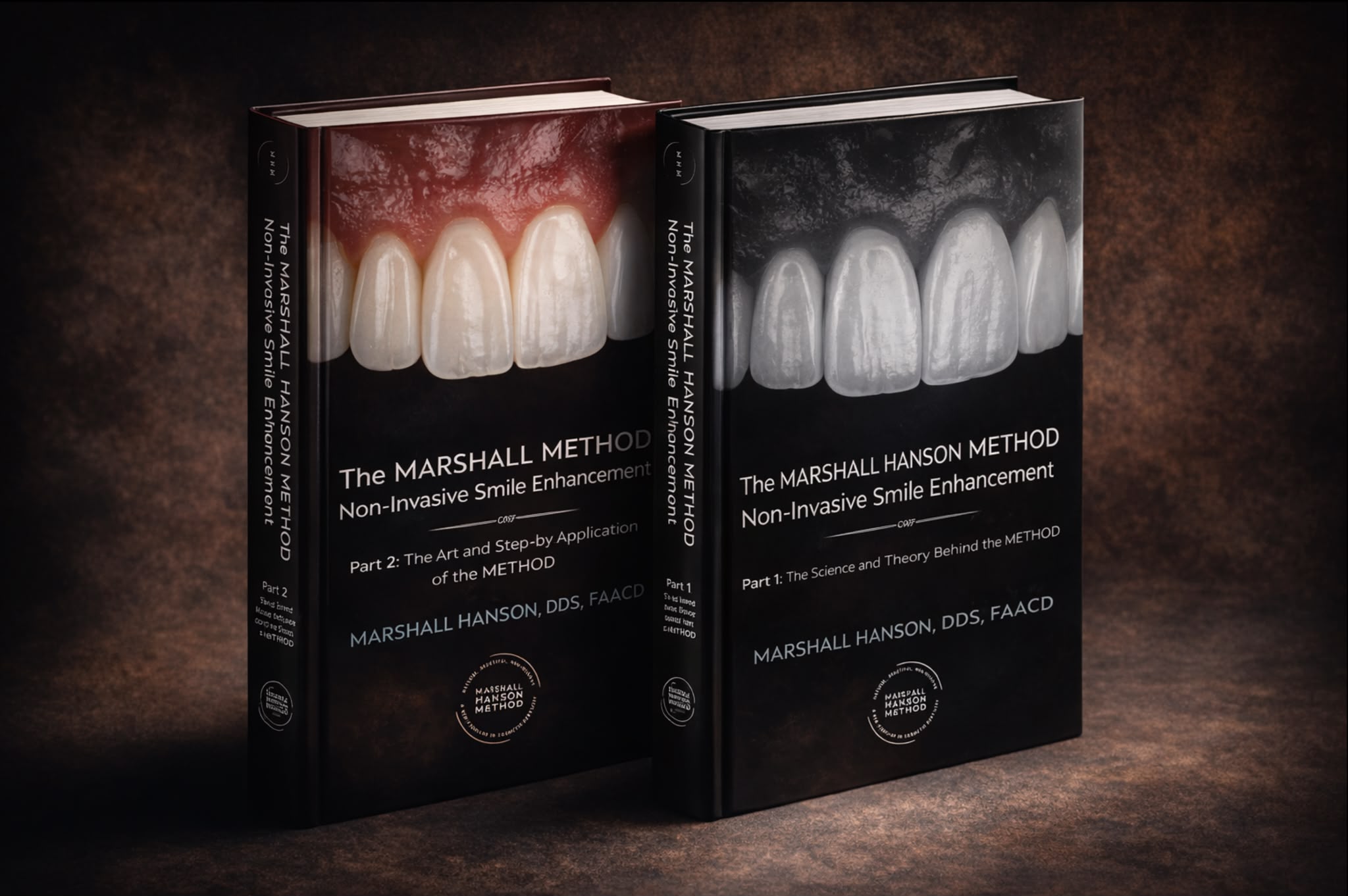
Available Now · Hardcover Edition

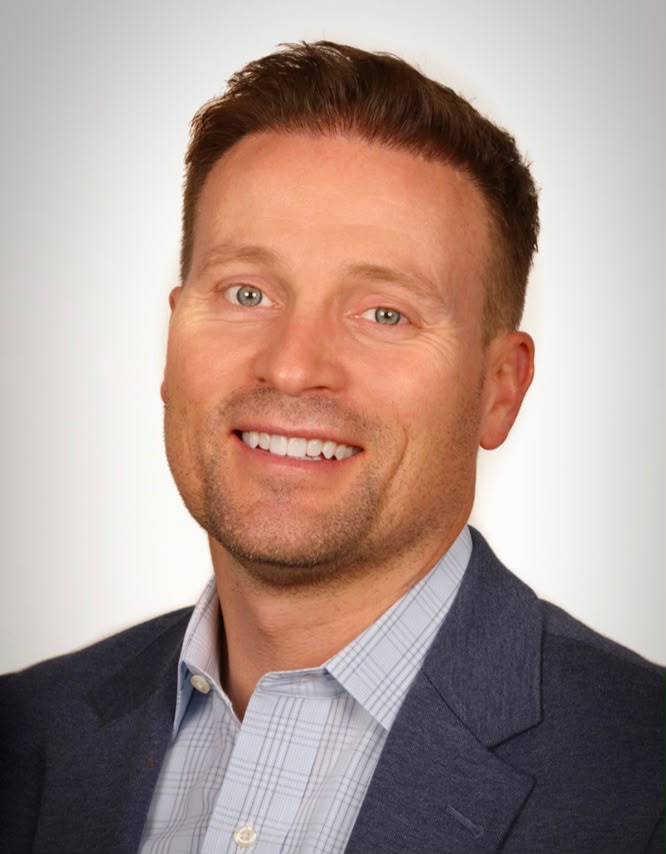
A Letter From Dr. Marshall
The “Art of Restraint” is the process of slowing down and thoughtfully considering the why behind what we do, and provides an opportunity to evaluate if what we are doing truly aligns with the values that we believe in and the best of who we want to be. This has been my journey with MHM.
Recognizing early that I didn’t like how I felt prepping otherwise healthy teeth for elective or cosmetic purposes, I have since been driven to develop a predictable approach to enhance nearly any smile without removing any tooth structure and produce a result that looks even more realistic than what I had been able to achieve with traditional protocols.
The resulting METHOD, born of this process, is not only changing the way that cosmetic dentistry is sought out and delivered, but it is challenging the way we think in our profession about what is possible. With MHM we no longer have to “prep” teeth for cosmetic purposes and we are looking evermore thoughtfully now toward nature as our standard for aesthetics rather than the fleeting social preferences of our time.
“The Art of Restraint”, as the first film in this series, offers a global invitation to align our actions with our beliefs, to honor the biology and beauty that nature has provided us and elevate the standard of care first in our individual practices and then ultimately within our profession as a collective whole.
Enjoy the film!
Dr. Marshall Hanson, DDS, FAACD Founder & Creator, The Marshall Hanson Method
A Companion Film
The Book and its course were developed alongside The Art of Restraint, a short film from Pasted Studio shot inside Dr. Hanson's practice.
A film by Pasted Studio
A Letter From The Director
Bonneville Salt Flats & Park City, Utah
When we started thinking about this film, I knew I didn’t want to make a film about dentistry. Not really.
I’ve always been fascinated by what makes someone’s work theirs. Why can two people technically do the same thing, yet one person’s work has a feeling to it that you immediately recognise? With Marshall, I think so much of that comes down to restraint.
There is a quietness to his work. He doesn’t need to overdo something to prove that something has been done. And that became the thread I wanted to pull through the entire film.
That’s why Utah felt so important.
We filmed across these completely different landscapes — out on the Salt Flats, up through Park City — and I became really interested in the relationship between Marshall and the environment around him. The Salt Flats are enormous, but there is almost nothing there. And somehow that absence makes everything feel more powerful. You notice the horizon. You notice movement. You notice a person standing within it.
There was something in that which felt incredibly close to Marshall’s work.
For me, directing is often about finding those connections that aren’t necessarily obvious on paper. It’s not just getting beautiful shots. It’s asking why this person, why this place, why this frame — and what are we actually trying to make somebody feel?
So we deliberately gave this film room. We let shots linger. We looked for tiny gestures and moments rather than constantly trying to manufacture something bigger. I wanted you to feel the scale of Utah, but also the nuance of Marshall within it.
Because ultimately The Art of Restraint is about much more than dentistry. It’s about taste. It’s about knowing yourself and your craft well enough that you don’t have to show everything you can do.
Sometimes the most confident creative decision is actually deciding what to leave out.
And I think that’s what I came away from Utah thinking about most: the people with the strongest point of view rarely need to shout about it.
Alan Clarke Director, The Art of Restraint
The Textbook
Available Now · Hardcover Edition
Available Now · Audio Edition
Digital Course
Every technique from the book, walked through in full — chapter by chapter.
More From MHM
Chairside Tool
Chairside Tool
Daily Practice